
Ceramic Heater: A Key Thermal Control Component for Semiconductor and High Temperature Precision Processes
In semiconductor manufacturing, vacuum processing, and high temperature industrial equipment, temperature control plays an important role in maintaining process stability and equipment performance. As manufacturing processes continue to develop toward higher precision, higher temperature environments, and more demanding thermal control requirements, traditional heating methods may face limitations in insulation performance, thermal response, structural integration, and temperature uniformity.
Ceramic Heater is a specialized heating component developed to address these requirements. By integrating heating electrodes into advanced ceramic materials such as Aluminum Nitride (AlN), Alumina (Al2O3), and Silicon Carbide (SiC), ceramic heaters combine electrical insulation, thermal management, and structural stability into a compact heating solution.
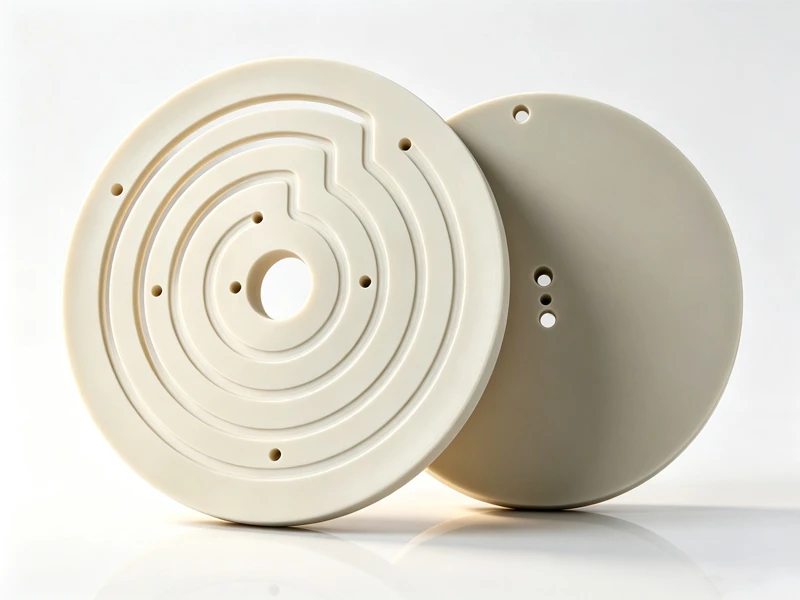
Ceramic heaters are widely used in semiconductor equipment, wafer processing systems, vacuum process equipment, high temperature treatment systems, and precision thermal control applications.
Material Selection Determines Ceramic Heater Performance
The performance of a ceramic heater is closely related to the selection of ceramic materials. Different applications require different thermal conductivity, insulation characteristics, temperature capability, and structural properties.
Aluminum Nitride Ceramic Heater (AlN Heater) is commonly selected for applications requiring efficient heat transfer and fast thermal response. With its high thermal conductivity and electrical insulation properties, AlN ceramic is suitable for precision heating systems where temperature response and thermal distribution are important considerations.
Alumina Ceramic Heater (Al2O3 Heater) is widely applied due to its stable material characteristics, mature processing technology, and reliable insulation performance.
Silicon Carbide Ceramic Heater (SiC Heater) is typically considered for high temperature applications due to its thermal stability and high temperature capability.
Manufacturing Challenges of Ceramic Heater Production
The manufacturing process of ceramic heaters involves ceramic material preparation, forming, sintering, precision machining, electrode fabrication, and electrical testing.
Ceramic sintering is an important process affecting final product performance. Materials such as AlN, Al2O3, and SiC require controlled sintering processes to achieve suitable density, internal structure, and mechanical characteristics.
After sintering, ceramic substrates require precision machining including surface grinding, dimensional adjustment, mounting hole processing, and electrode area finishing.
Ceramic Heater Applications
Ceramic heaters are widely used in semiconductor manufacturing equipment, wafer processing systems, vacuum process equipment, high temperature treatment systems, precision heating platforms, laboratory heating equipment, and specialty industrial thermal systems.